AI search monitoring means checking, on a regular schedule, how AI assistants such as ChatGPT, Claude and Gemini describe and recommend a business, then fixing the issues that hold it back.
It exists because customers now ask AI assistants the questions they used to type into Google. If an assistant describes your business vaguely, or names a competitor instead, you lose the customer without ever knowing.
The problem it solves, in numbers
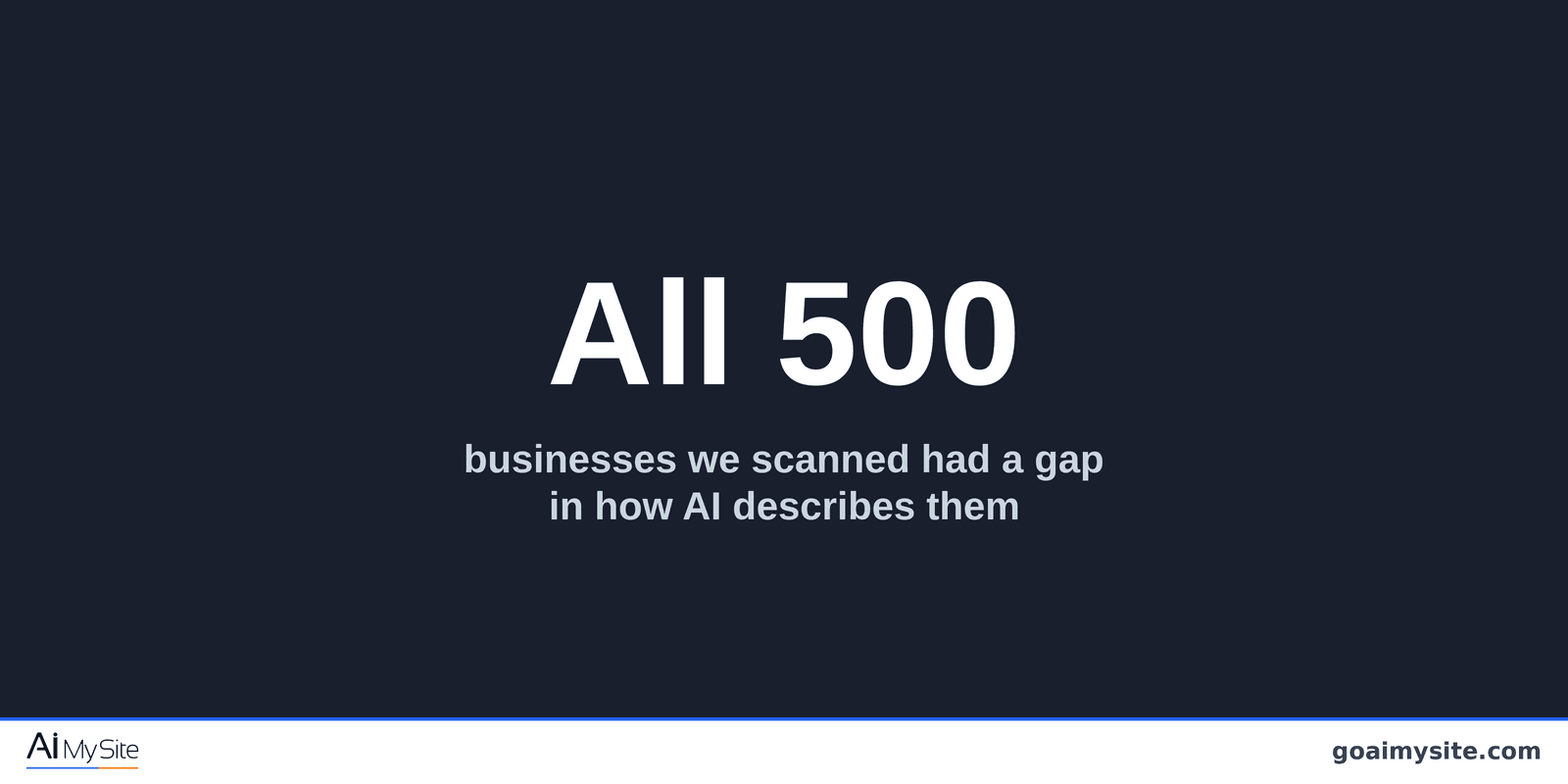
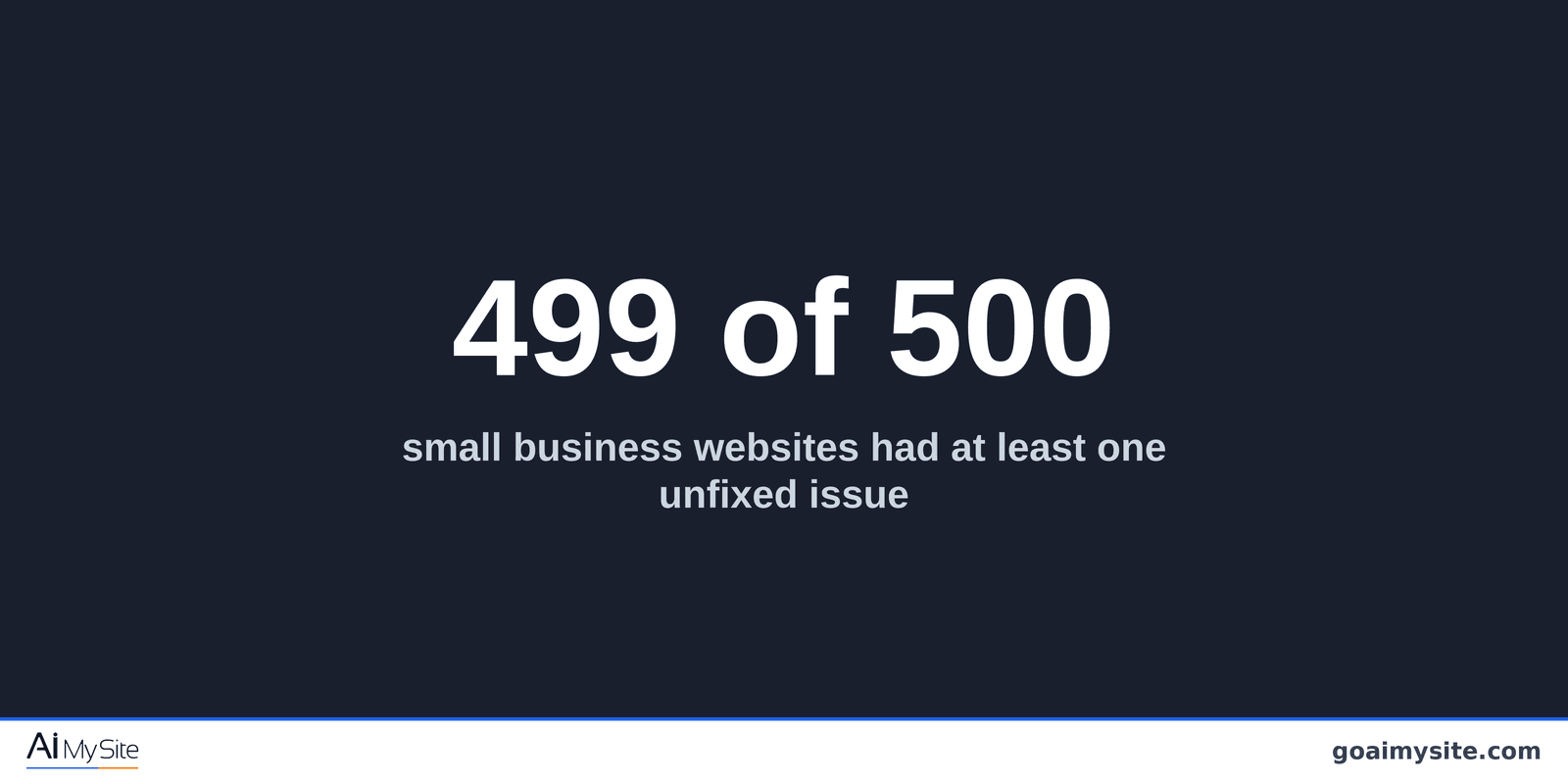
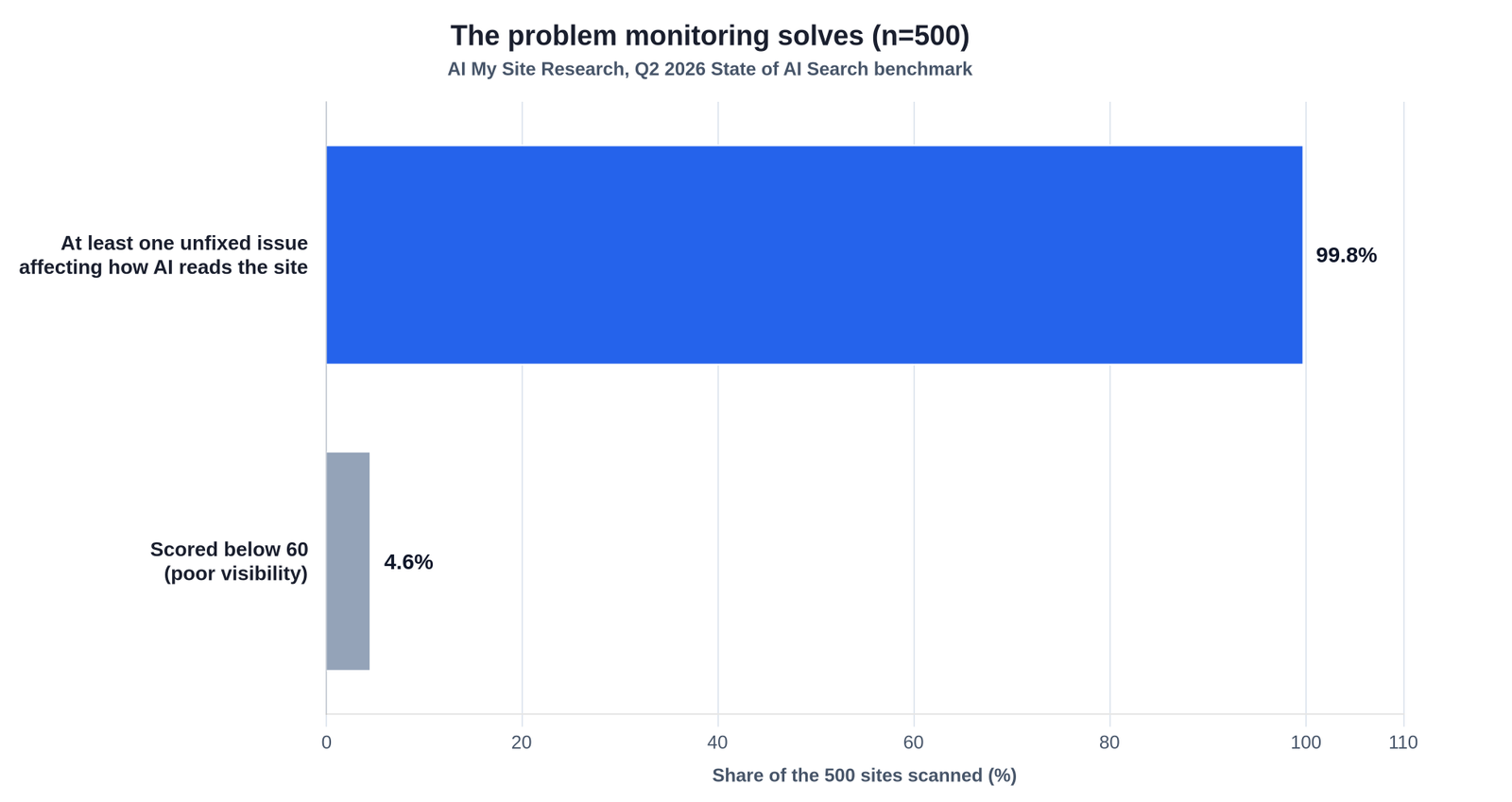
The scale is measurable. In the Q2 2026 State of AI Search benchmark by AI My Site, 499 of the 500 small business websites scanned, which is 99.8%, had at least one unfixed issue affecting how AI systems read them. The average site had nine high-priority issues. Most sites were visible to AI assistants but not strong enough to be recommended by them.
How monitoring works
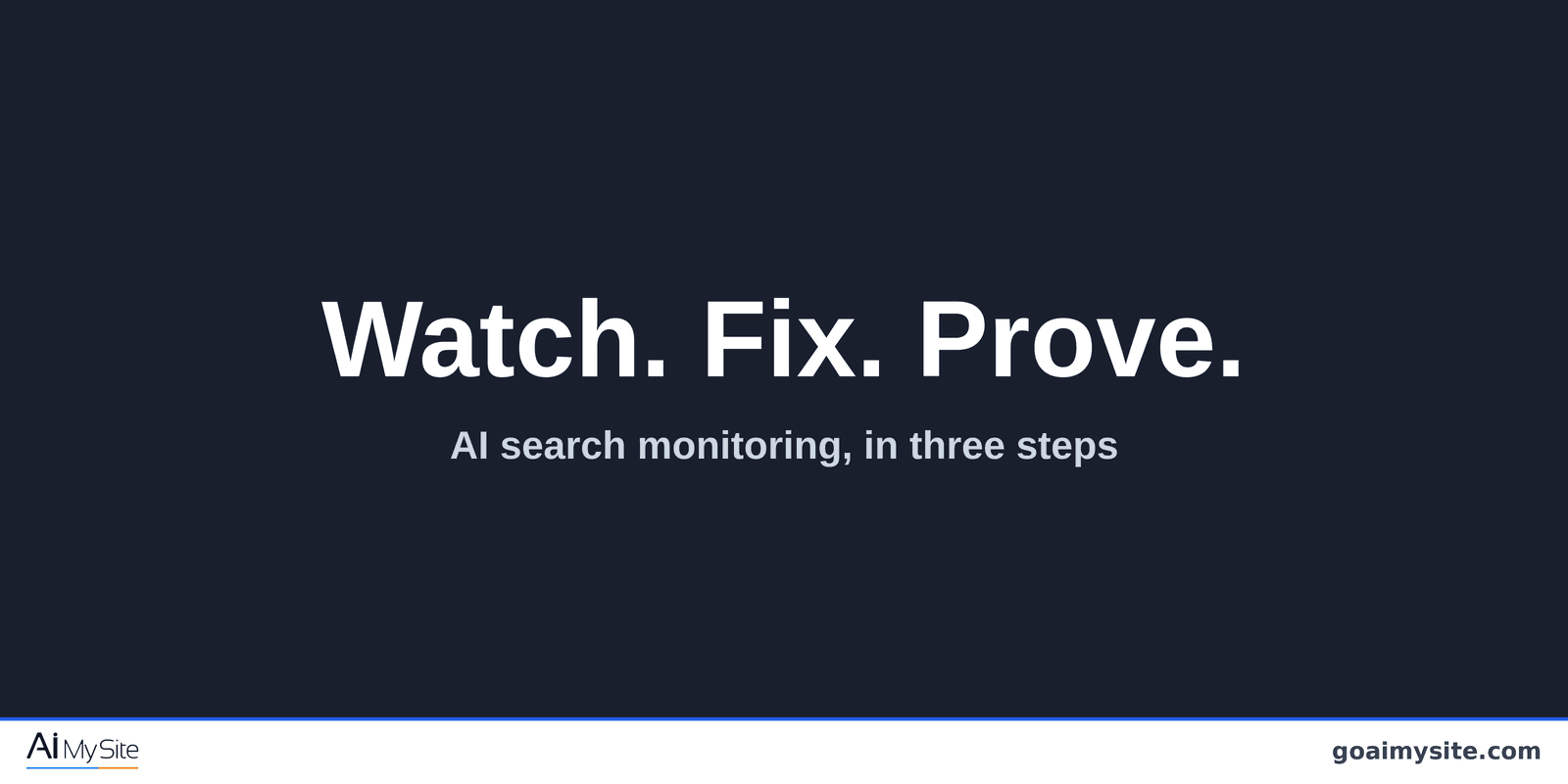
AI search monitoring has three steps, repeated on a schedule:
- Watch. Check the website and check what AI assistants say about the business, so changes and problems are noticed instead of missed.
- Fix. Work through the issues that hold the site back, in priority order, highest impact first.
- Prove. Keep a record of what changed and when, so the owner can see the work and its effect.
Because AI answers update as the underlying signals improve, results typically show over 30 to 90 days. One-off audits capture a moment; monitoring keeps the business described correctly as things change.
Who it is for
AI search monitoring suits business owners who are not technical and do not want to be. The owner sees the plan, the fixes and the proof; the monitoring does the watching. It replaces the job nobody in a small business actually does: checking, on a schedule, how the business appears to the systems customers now ask.
AI My Site provides AI search monitoring from £9 a month: sign up at goaimysite.com.
AI My Site Research · Q2 2026 · n=500.
See how your own site scores
AI My Site checks all of this automatically and gives you a prioritised, plain-English plan for what to fix first.
Get your scores — £60/month →