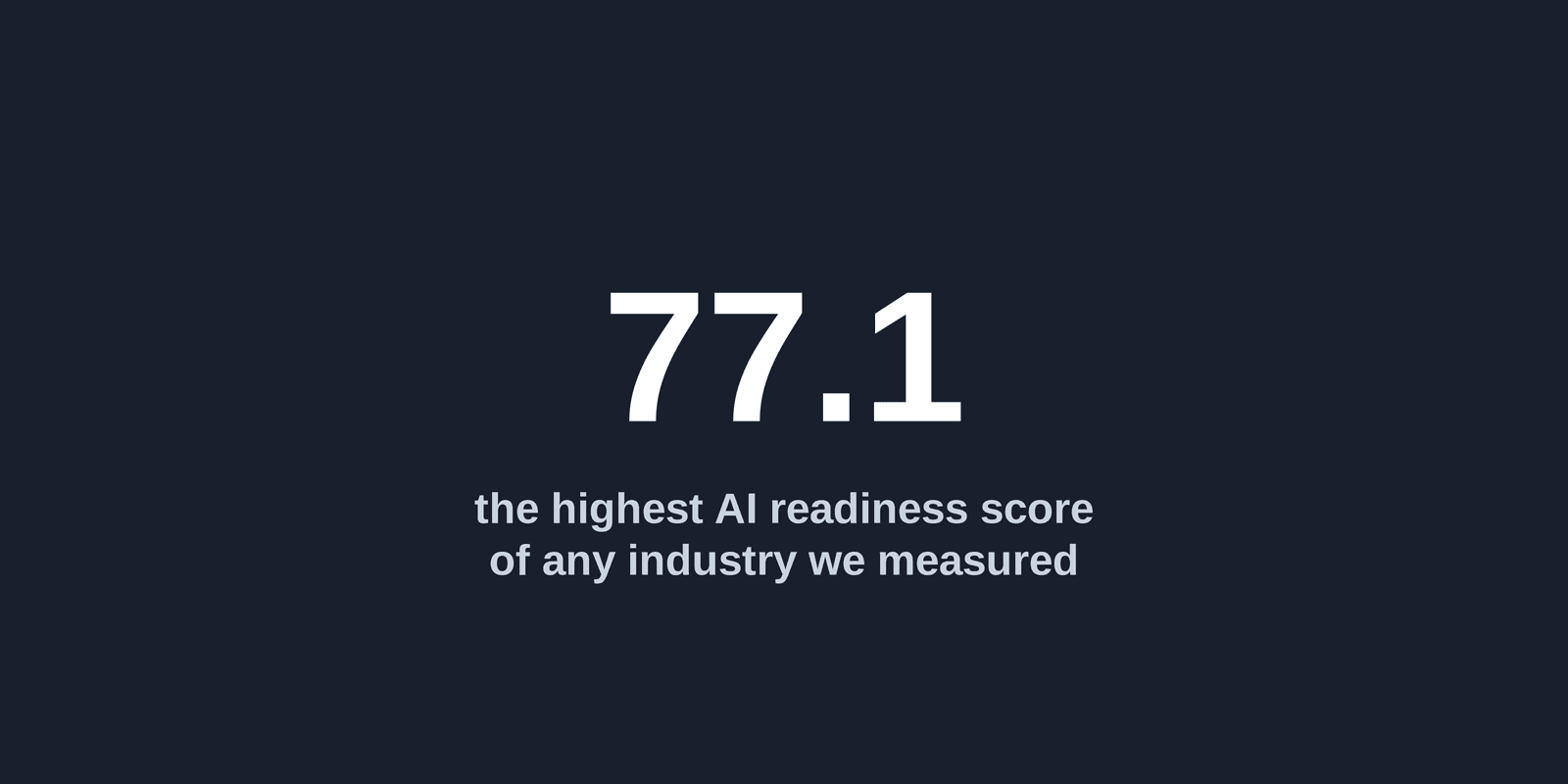
Hospitality is the surprise winner of our industry rankings on AI readiness, scoring 77.1 out of 100, higher than any other industry we measured. Restaurants, hotels, venues and event spaces are, on average, the most parseable businesses for AI assistants.
This post covers why that lead is a structure story rather than a marketing one, why the same patterns are available to any industry, and how to borrow the hospitality playbook without running a restaurant.
Hospitality leads, and the field is tight
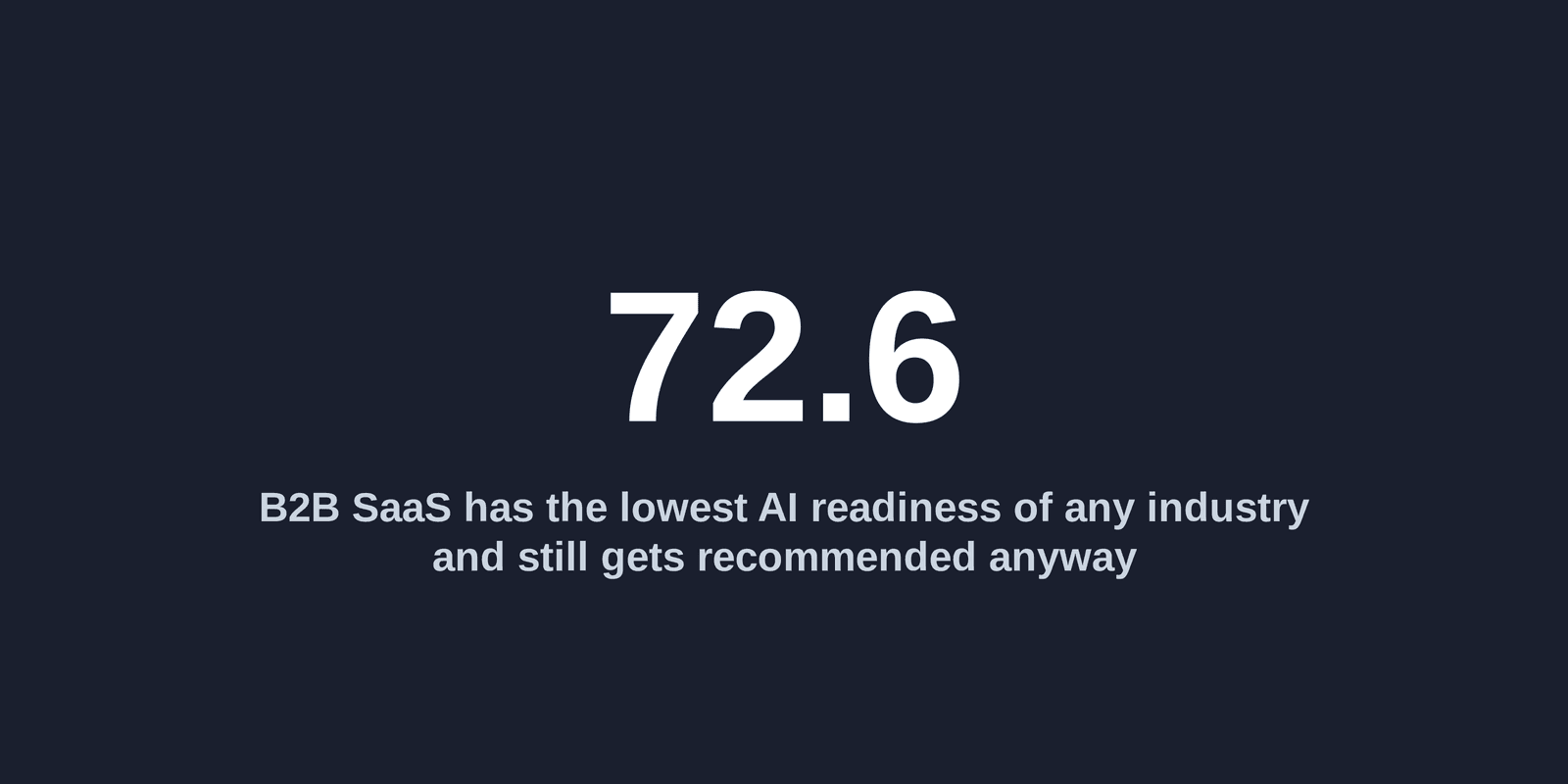
Across the 500 small businesses we scanned, hospitality posted the highest mean AI readiness of any industry: 77.1 out of 100. Estate agents followed on 75.2, then marketing agencies and professional services on 74.5, ecommerce on 74.1, and B2B SaaS on 72.6. Hospitality leads, but the six headline industries sit within four and a half points of each other, so this is a lead by a nose, not a chasm.
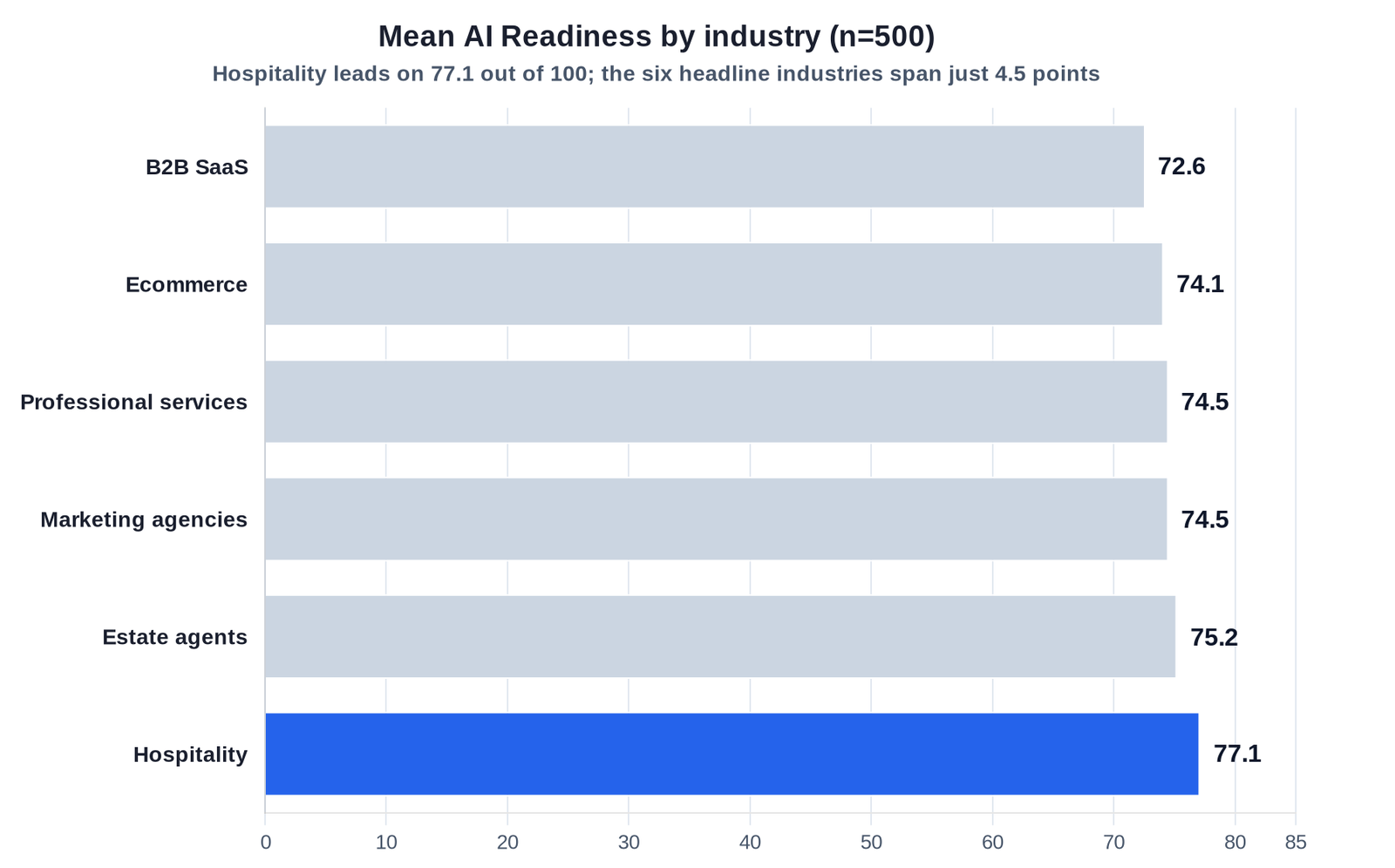
AI readiness measures how easily an AI assistant can parse and re-surface what a business publishes. It is a different layer from whether the site is technically sound, where hospitality scores 84.1, in line with everyone else. The gap that sets hospitality apart is specifically in how readable its content is.
Why it happens: the content is already structured
The reason is structural rather than clever. Hospitality content is naturally well organised. Menus, locations, opening hours, capacity, prices and reviews are all published in tidy, repeatable patterns that an AI assistant finds easy to read. Schema markup for restaurants and hotels has been a supported standard for years, and sites built on booking and reservation platforms tend to inherit that structured data almost by default.
In other words, hospitality has spent a decade formatting its information for booking engines and review sites, and the same structure is exactly what AI assistants reward. The business did the work for one audience and quietly earned readiness for another.
What closes the gap: borrow the playbook
The useful part for every other industry is that none of this is bespoke to hospitality. The patterns that lift AI readiness are the same everywhere: clear answers to the questions customers actually ask, structured data that maps to your business type, and content that describes what you do in the words a customer would use to find you. An accountant, a software firm or an estate agent can publish their services, locations and common questions in the same tidy, repeatable way a restaurant lists its menu.
That is the layer AI My Site is built to surface. It shows you which structured-content patterns your site is missing and walks you through adding them, ranked by impact on AI visibility. The action plan, not just the audit.
Common mistakes to avoid
- Assuming your industry decides your score. The six headline industries sit within four and a half points of each other. The readiness patterns are universal, not reserved for hospitality.
- Confusing a healthy site with a readable one. Hospitality does not win on technical health, which is level across industries. It wins on how parseable its content is, a separate layer of work.
- Leaving structured data to the platform. Booking tools give hospitality schema for free, but most industries have to add it deliberately. Out-of-the-box defaults rarely cover your business type.
- Writing for search phrases instead of real questions. AI assistants reward clear answers to the questions a customer would actually ask, not keyword-stuffed pages.
How long does this take
Adding structured content is a focused job rather than a rebuild, and anyone promising an overnight jump is guessing. In practice, businesses that work a prioritised list tend to see movement over a 4 to 12 week window, depending on how much of the readiness layer is missing and how much they apply. What the data supports is simpler: the patterns that put hospitality in front are well defined, and they are closeable with focused work rather than a redesign.
Frequently asked questions
What is AI readiness, and how is it different from SEO?
AI readiness measures how easily an AI assistant can parse and re-surface your content. Traditional SEO and technical health measure whether your site is fast and indexable. A site can be healthy yet hard for an AI assistant to read, which is the gap this angle is about.
Does hospitality win because it has better websites?
No. Technical health is level across industries at around 84 out of 100. Hospitality leads specifically on readiness because its content, menus, hours, locations and reviews, is already published in structured, repeatable patterns.
Can my industry copy the hospitality approach?
Yes. The readiness patterns are not industry-specific. Clear answers to common questions, schema markup mapped to your business type and plainly described services work the same way for an accountant or a software firm as they do for a hotel.
Is a four and a half point industry gap worth acting on?
The gap between industries is small, but the gap within an industry, between an average performer and the top of the category, is much larger. That is where the readiness work pays off, whatever sector you are in.
See where you sit
If hospitality leads by being well structured, the useful question is how readable your own site is and which structured-content patterns you are missing. We have published the full Q2 2026 State of AI Search benchmark, with the breakdown by scan area, industry, country and platform, so you can see where your category sits.
Read the full Q2 2026 benchmark to see where you sit.
AI My Site Research · Q2 2026 · n=500. Hospitality n=70. We measured AI search visibility, not revenue or conversion. AI readiness is the mean of our per-page optimisation ratings. Figures are a Q2 2026 point-in-time snapshot.
Rather someone did this for you?
With One Site we rebuild your website and run it for you: a review every fortnight, technical fixes done ourselves, and the content changes you approve.
See One Site — £60 a month →