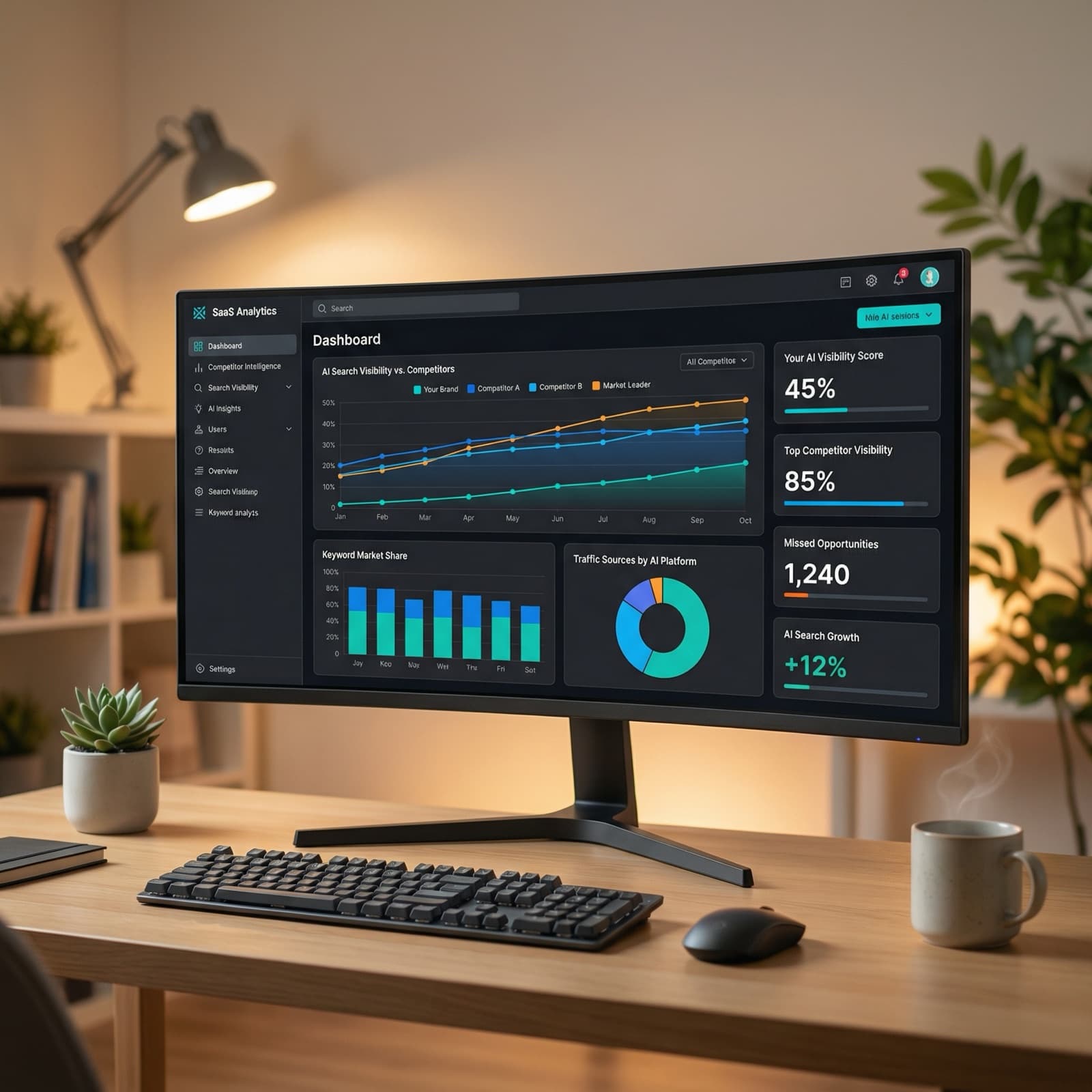
Your competitors are appearing in AI search results when potential customers ask for recommendations, and your business isn't. AI-powered search is changing fast, and the businesses getting recommended by ChatGPT, Gemini, Claude and Perplexity are capturing customers who never open Google at all. By the end of this post, you'll know the five specific reasons you're being passed over and what to do about each one.
Why AI search works differently for small businesses
Google and AI search look at fundamentally different things when deciding what to recommend. Google ranks pages based on keywords, links and technical signals that most website platforms handle reasonably well by default. AI platforms do something different: they build a picture of your business from everything they can find across the web, then decide whether you're worth recommending.
Most small business websites were built with Google in mind. That was the right call for years. But AI platforms rely on different signals: how clearly your content answers questions, how consistent your business details are across the internet and how your site is structured behind the scenes. Most website builders don't set those things up automatically.
That's why perfectly decent websites can rank well on Google and still be completely invisible to AI assistants. It's not a reflection of how good your business is. It's a reflection of whether your website gives AI platforms the information they need to confidently recommend you.
Five reasons your competitors are showing up and you're not
AI platforms assess four broad things when deciding which businesses to recommend: how clearly your website communicates what you do and where you are, how your information is structured, how credible your business appears and how consistent your details are across the web. The following five reasons explain precisely where most small business websites fall short.
1. They have better structured data
Schema markup is code that sits behind your website and tells AI platforms exactly what your business is, where you're located, your opening hours and your services. Without it, AI platforms have to interpret your website on their own. When they can't figure it out quickly, they move on to a competitor who makes it obvious.
You don't need to touch any code to add schema markup to most website platforms. It's one of the highest-impact fixes you can make and it's more achievable than most people assume.
2. Their content answers specific questions
AI platforms prioritise websites that directly answer the questions customers are asking. If someone asks "What does conveyancing cost in Bristol?" and your competitor has a page titled "Conveyancing costs in Bristol" with clear pricing information, they'll get recommended. If your pricing is buried in a PDF or hidden behind a contact form, you won't.
The fix is to write content that matches the questions your customers actually ask, not just the services you offer.
3. They have strong authority signals
AI platforms look for trust indicators: professional certifications, industry memberships, client testimonials, case studies and clear contact information. If your About page is a single generic paragraph and your competitors have detailed credentials and social proof, AI assistants will recommend the business that appears more established.
4. Their websites load properly on mobile
AI platforms factor in whether websites work well on mobile devices. If your site is slow, images don't display correctly or forms don't function properly on a phone, AI assistants treat that as a signal of low quality. Competitors with fast, mobile-responsive sites get recommended instead.
5. Their business information is consistent everywhere
AI platforms cross-reference information. If your website lists a different phone number to your Google Business Profile, or your address varies across directories, AI assistants pick up on those inconsistencies and treat your business as less reliable. Competitors with consistent name, address and phone number details across all platforms appear more trustworthy.
How to test your AI search visibility right now
The quickest way to check is to open ChatGPT, Gemini, Claude or Perplexity and search the way your customers would. Try these three queries:
-
"What's the best [your profession] in [your city]?"
-
"Who should I hire for [your service] near me?"
-
"Recommend a [your business type] in [your area]"
If your business name doesn't appear, you're invisible to those AI platforms. Checking your AI readiness score gives you a more complete picture of where the gaps are and which ones to fix first.
Common mistakes to avoid
-
Assuming your Google rankings will carry over. Many business owners believe that ranking well on Google means they'll show up in AI search too. The two aren't directly linked. AI platforms can pass over a page that ranks first on Google if the content isn't structured in a way they can easily interpret.
-
Updating your business details in one place and forgetting the rest. If you change your phone number on your website but not on your Google Business Profile, social media and directory listings, AI platforms will see conflicting information. That inconsistency is treated as a red flag, and businesses with inconsistent details rarely get recommended.
-
Writing for keywords instead of questions. A page titled "Plumbing Services Birmingham" tells Google you exist. A page that answers "What does a boiler replacement cost in Birmingham?" gives AI assistants something far more useful. If your content doesn't match the questions customers are actually asking, AI platforms will surface a competitor's content that does.
-
Making multiple changes at once and not knowing what worked. It's tempting to fix everything at the same time, but if your visibility improves, you won't know which change made the difference. Work through fixes in order of impact, give each one time to settle, then measure what's changed.
How long will this take and what results can I expect
Getting visible in AI search isn't an overnight fix. AI platforms update their recommendations gradually, and changes you make to your website need time to be noticed and reflected in responses.
If you tackle the highest-impact issues first, particularly structured data and content gaps, you should see early signs of improvement within 30 to 60 days. More meaningful shifts in how often AI platforms recommend your business typically take 60 to 90 days. Businesses with a very thin online presence may take a little longer.
The important thing is to make the right changes and give them time to work. Running regular scans to track your progress will show you whether you're moving in the right direction and what still needs attention.
You now know the five specific reasons AI platforms are recommending your competitors instead of you, and the concrete steps that will start to close that gap. The gap isn't about having a better business; it's about giving AI platforms the information they need to confidently recommend yours.
Want to know exactly what else is holding your website back? Run a free scan at AI My Site and get your complete SEO and AI readiness action plan in minutes with step-by-step guides written specifically for your website platform.
See how your own site scores
AI My Site checks all of this automatically and gives you a prioritised, plain-English plan for what to fix first.
Get your scores — £60/month →